Divisiones del Derecho (III) "Ius civile", "Ius gentium", "Ius naturale" Derecho Romano

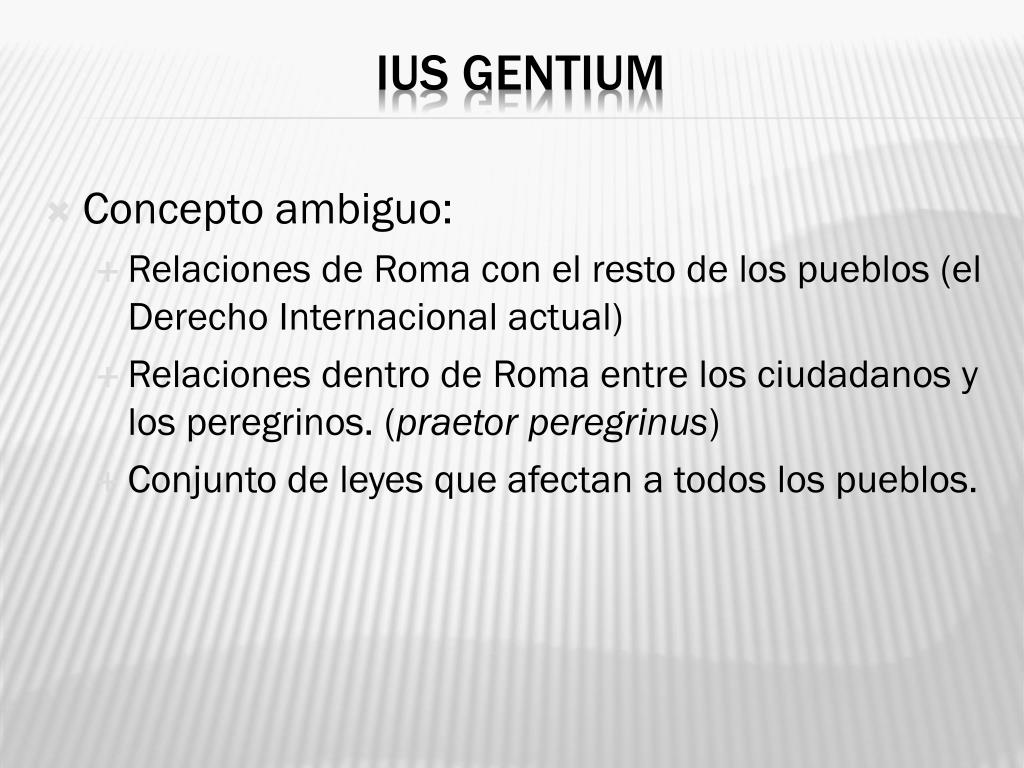
Ius gentium. Ius gentium o jus gentium, el derecho de gentes, en un sentido restringido comprende las instituciones del derecho romano de las que pueden participar los extranjeros ( peregrini) que tenían tratos con Roma y sus ciudadanos ( cives ), por lo que supone una complementación del ius civile, para aplicarlo con individuos que no.
Divisiones del Derecho (III) "Ius civile", "Ius gentium", "Ius naturale" Derecho Romano

The three legal elements typical of the Roman law tradition: ius civile, ius honorarium, ius gentium, stand out in their relationship with jurists, the task of Roman jurisprudence, and the activity of the Praetor based on equity.. Departamento de Derecho Civil Calle 12 No. 1-17 este, Bogotá, Colombia Teléfono: (571) 2826066 ext. 1071.
S3 Contexto. Derecho Romano, Ius Civile, Ius Naturale y Ius Gentium. PDF Propiedad La

Reportons-nous au passage qui clôt le chapitre viii et plus spécialement à la démonstration qui s'achève par le second corollaire. On y observe une intervention décisive des sources grotiennes du droit. L'acquisition bilatérale de la proye, affirme-t-il, serait inconcevable en vertu du seul ius gentium primarium. En effet, ne commande-t-il pas en tout état de cause la restitution.
Conceptos fundamentales del derecho romano El ius civile, ius honorarium, ius gentium y otros

Cuius tempora eius ius - one may say in the language with which Europe was built. In every age of history, the law has had its own language - Latin, German, French, and English mainly - and its own idiomatic way of generating concepts. Law is life; it is experience. The words U.S. Supreme Court Justice Oliver Wendell Holmes uses to begin.
Del tema 6 al 9 (ius civile, ius gentium...cristianismo y bajo imperio) Apuntes de Derecho
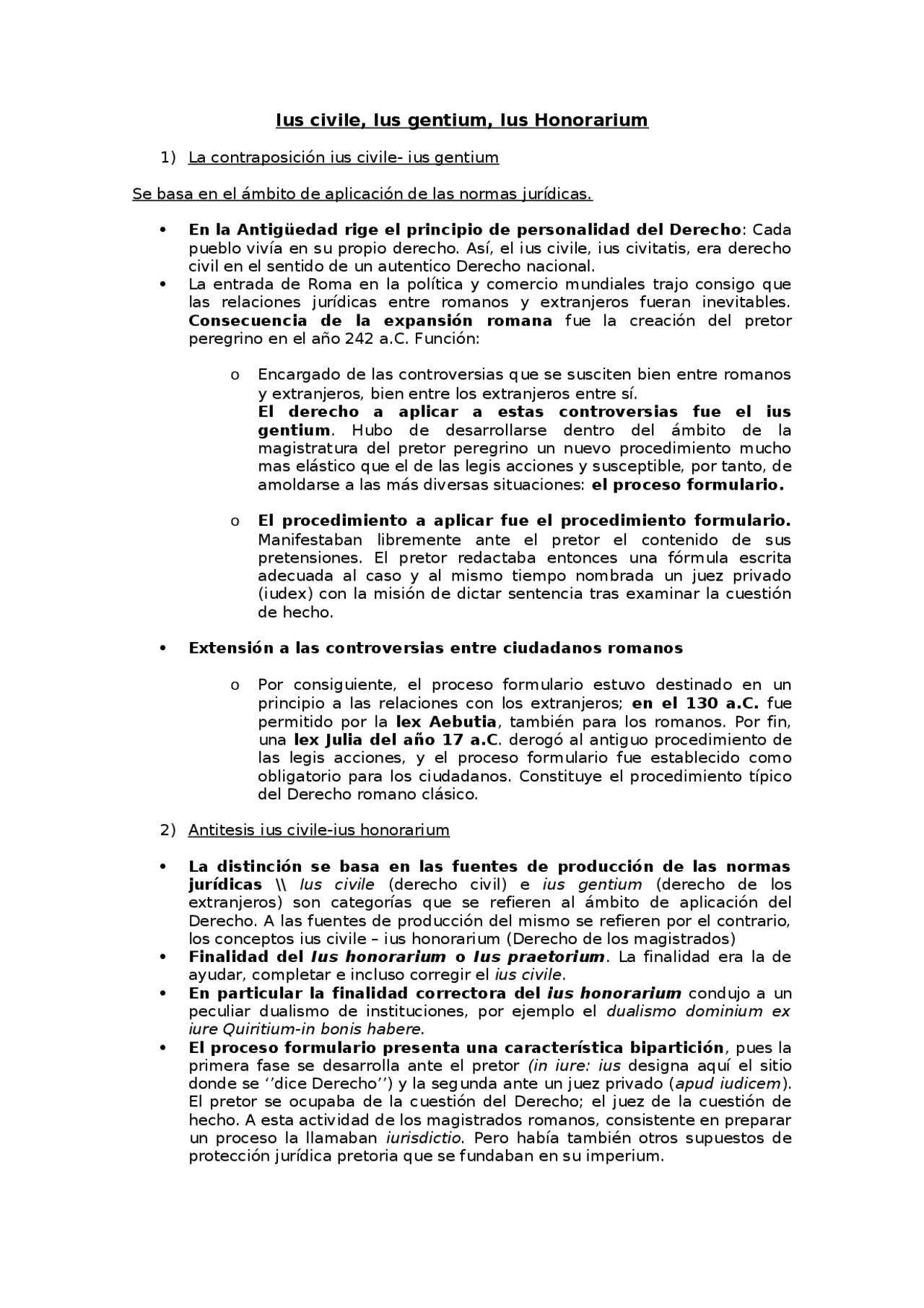
The Ius Gentium of the Roman Law. Por: Anavitarte, E. J.* The ius gentium or "law of nations", is the body of legal institutions that the Romans considered common to all human societies, and therefore applicable to any free person.. This legal body was opposed to the ius civile (-is), which was exclusive to Roman society, so during the preclassic period it would only apply to foreigners from.
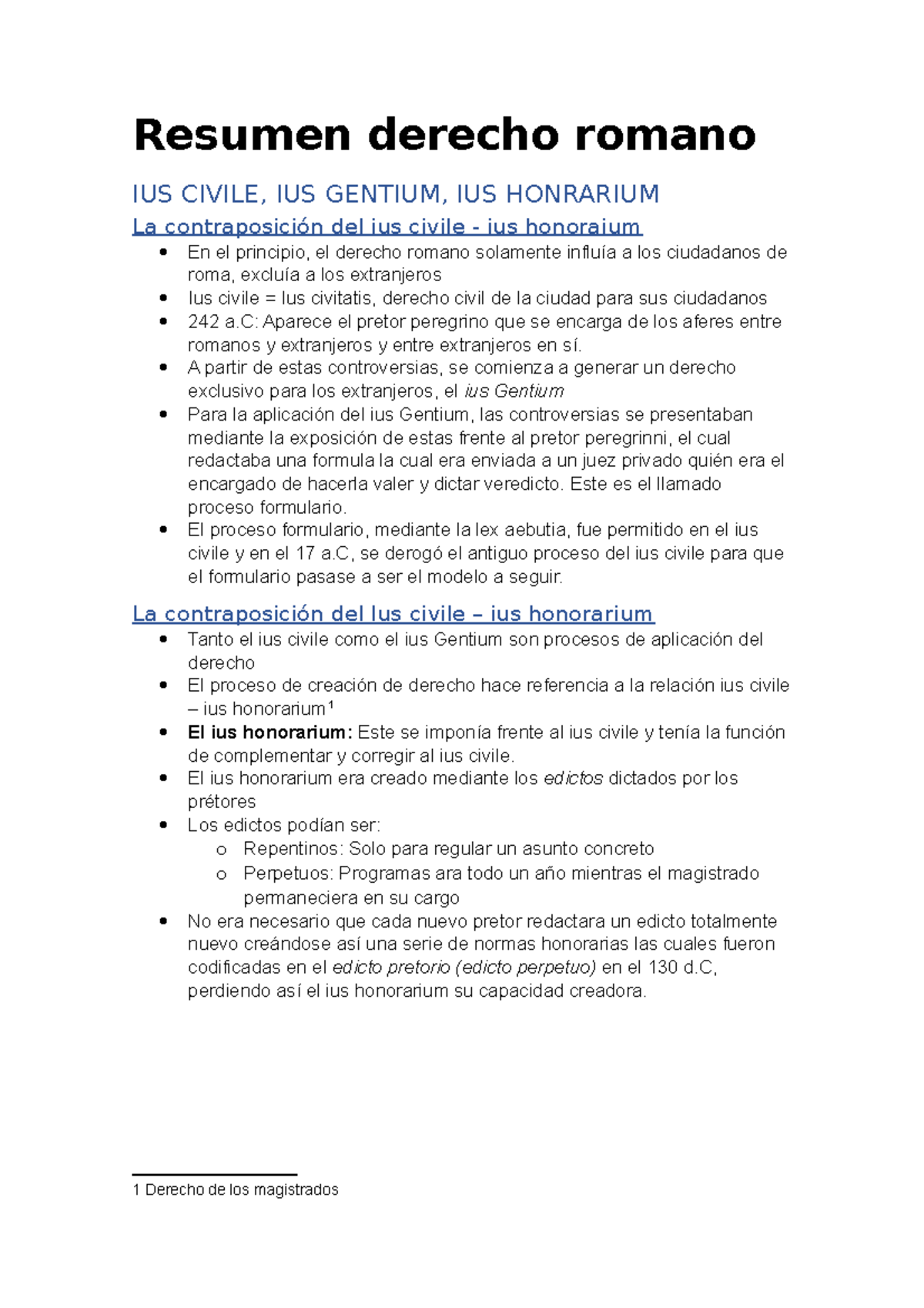
Divisiones del Derecho (II) "Ius civile" y "Ius honorarium" Derecho Romano

29 Par exemple, chez Jean Bassien, Lectura in D.I.1.6, ius civile : « Itaque quasi dicat quia ius civile dicitur quod non per omnia servit iuri naturali vel gentium, per quod notatur quod aliquid ei addat ; item quod non in totum ab eis recedit, per quod notatur quod aliquid detrahat : merito cum aliquid addimus vel detrahimus iuri communi, id.
ΦΙΛΟΣΟΦIΑ Ius gentium et Ius civile

corregir el Ius Civile". Esto impone necesariamente una especialización y diferenciación del viejo Ius Quiritium, apareciendo el Ius Civile, o derecho de los ciudadanos romanos. Y como derivación del Ius Civile, el Ius Gentium, o Derecho común a todos los habitantes del imperio, sean romanos o extranjeros. El Ius Gentium es un Derecho
Ius Civile Ius Naturale Ius Gentium Derecho Romano

iūs gentium. Or law of nations, has two main senses. (1) In a 'practical' sense it denotes that part of Roman private law which was open to citizens and non‐citizens alike. The institutions of the old ius civile were accessible only to Romans, but the growth of international trade made it necessary to recognize some institutions which.
Resumen de romano Resumen derecho romano IUS CIVILE, IUS GENTIUM, IUS HONRARIUM La del ius
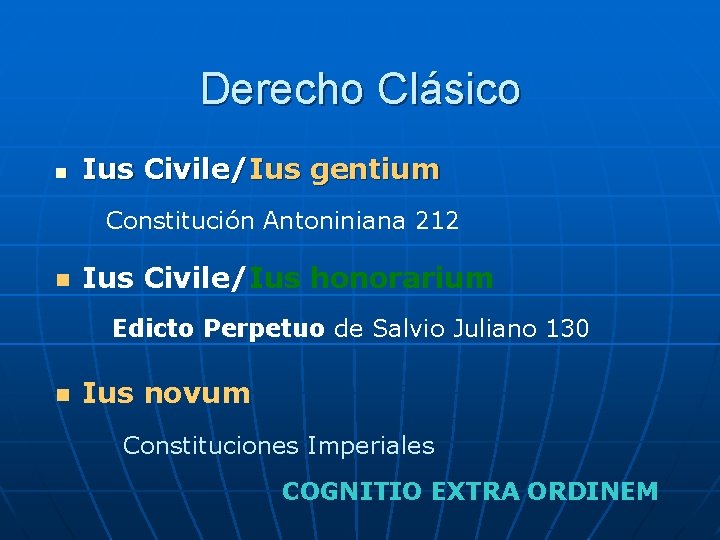
De acuerdo con las Instituciones de Justiniano (I. 1, 2), el Derecho privado romano se divide en tres partes: Derecho natural ( ius naturale ), Derecho de gentes ( ius gentium) y Derecho civil ( ius civile ). La diferenciación entre Ius civile, Ius naturale e Ius gentium era clave en Derecho romano. Antes de dar una noción de cada uno de.
Roma derecho romano
Part I Ius Gentium and the Origins of International Law; Part II International Law and Western Civilization; Part III International Law, Islam, and the Third World; Part IV Conditions for Peace; Glossary of Arab Terms; Index; Get access. Share. Cite. Summary. A summary is not available for this content so a preview has been provided. Please use.
Derecho Romano Derecho Estudio actual Vigente Instituciones Romano
THE IUS GENTIUM IN THE MIDDLE AGES. The doctrine of ius gentium was adopted in full by jurists (both civil and canon law writers) and by medieval theologians, although in a radically different context, where the law of nations occupies only a secondary place. The paradigm for the application of the law of nations in the Middle Ages was the law of the sea, employed, for example, at England's.
Derecho Romano Inicios del Derecho Romano

El ius gentium era el derecho común a todos los pueblos, aplicable a los extranjeros y basado en principios universales de justicia. El ius civile se aplicaba solo a los ciudadanos romanos. El ius gentium era un derecho más universal, aplicable a todos los individuos, incluso extranjeros. El ius civile se basaba en las costumbres y leyes.
Ideas romanas del Derecho (II) "ius" y "fas" Derecho Romano

El Ius Civile. Por: Anavitarte, E. J.* El ius civilis o ius civile fue todo aquel derecho que los romanos aplicaban solo a sí mismos, bien fuera por haberlo creado democráticamente en los comicios o el senado, o porque su uso dentro de la ciudad fuera antiguo y respetado.. Así, este conjunto de normas jurídicas, son la esencia del derecho romano, pues constituyen su núcleo axiológico.
PPT Derecho romano PowerPoint Presentation, free download ID1912629
crito y derecho no escrito (ius scriptum y ius non scriptum); derecho común y derecho singular (ius comune y ius singulare); doctrina y leyes (iura y leges), así como la distinción entre: derecho civil, derecho de gentes y derecho natural (ius civile, ius gentium y ius naturale). También, dentro de estos conceptos fun-
U. I Generalidades del derecho romano ÍNDICE PRIMERA UNIDAD CONCEPTOS GENERALES DEL DERECHO

In classical antiquity, the ius gentium was regarded as an aspect of natural law (ius naturale), as distinguished from civil law (). The jurist Gaius defined the ius gentium as what "natural reason has established among all peoples":. Every people (populus) that is governed by statutes and customs (leges et mores) observes partly its own peculiar law and partly the common law of all mankind.
Ius Civile Ius Naturale Ius Gentium Derecho Romano

Article I. ‚Jus honorarium' und ,ius civile' was published on August 1, 1984 in the journal Zeitschrift der Savigny-Stiftung für Rechtsgeschichte: Romanistische Abteilung (volume 101, issue 1).